Standardized Metrics

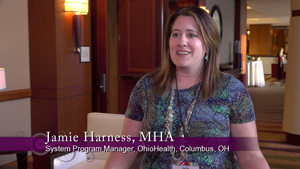
Jamie Harness values being able to use the AONN+ standardized metrics to quantify the work done by the navigators in her program.
Tricia Strusowski explains why metrics are so important to the navigation profession.
Danelle Johnston, Vicki Kennedy, and Tricia Strusowski agree that administrators often don't understand what navigators do. They provide information on resources that support the role of the navigator.
Tricia Strusowski and Danelle Johnston agree that, when talking to physicians, it's important to note that the AONN+ standardized metrics align with national standards. They also recommend having multiple elevator pitches tailored to different audiences.
Lillie Shockney asks AONN+ conference attendees if physicians understand the role of the navigator, and one navigator says the standardized metrics really help to communicate roles and responsibilities.
Tricia Strusowski refers to the standardized metrics source document to help navigators determine their caseload. The metrics panel then addresses how navigators can set their patients' expectations regarding treatment and boundaries.
Tricia Strusowski notes that determining appropriate caseloads is a challenge and provides insight into the steps the AONN+ Metrics Subcommittee is taking to establish benchmarks.
The metrics panel provides an AONN+ member with suggestions on how to work within restrictive parameters to track patients and measure ROI.
Vicki Kennedy, Danelle Johnston, and Tricia Strusowski reflect on when and how to best begin implementing standardized metrics, suggesting it might be best to start small and to build relationships in order to build a tangible case to make about the value of the navigator.