Role of the Navigator

Lillie Shockney asks AONN+ conference attendees if physicians understand the role of the navigator, and one navigator says the standardized metrics really help to communicate roles and responsibilities.
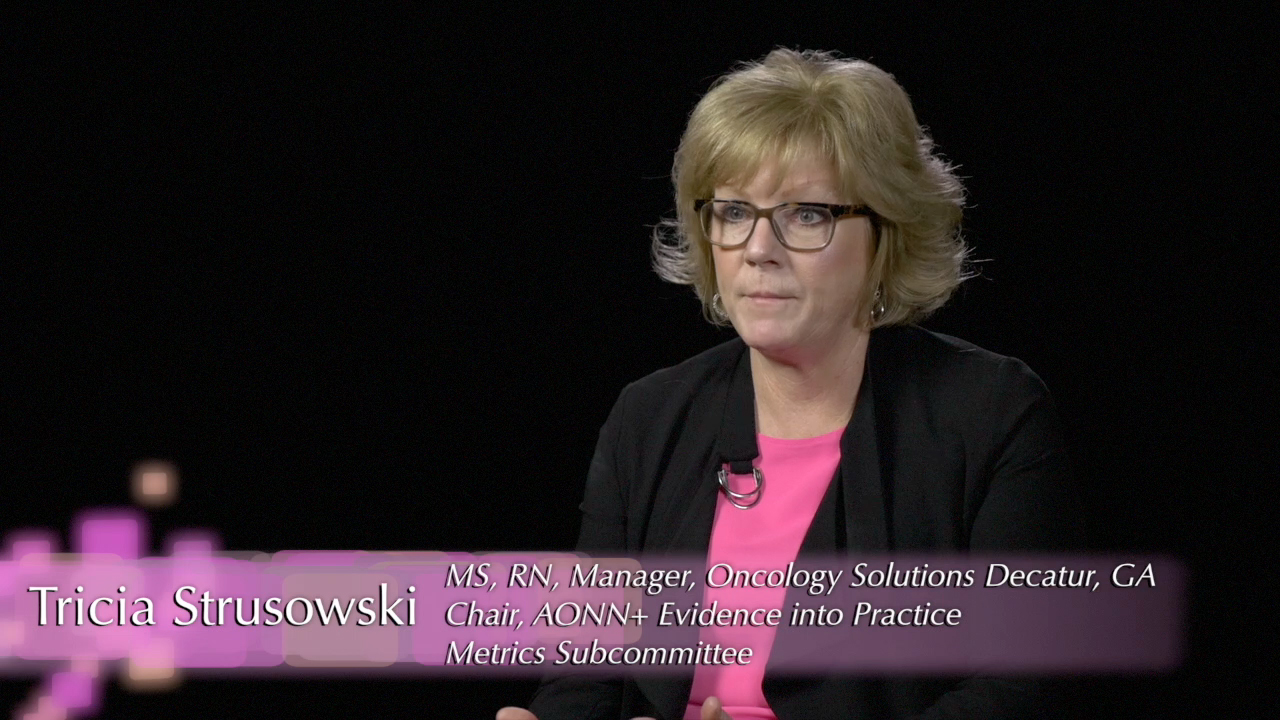
Tricia Strusowski refers to the standardized metrics source document to help navigators determine their caseload. The metrics panel then addresses how navigators can set their patients' expectations regarding treatment and boundaries.
Tricia Strusowski stresses the importance of getting navigators involved in a patient's cancer care as soon as possible and believes the AONN+ standardized metrics can help navigators take patient care to the next level.
Linda Burhansstipanov believes that AONN+ is valuable for providers, social workers, administrators, and other members of the health care team. Hear why.
Each patient has their own unique needs. Linda Burhansstipanov believes it's important to create a partnership with patients in order to truly understand them and help them through their cancer journies.
Linda Burhansstipanov addresses some of the most common misconceptions that people have regarding the role of the patient navigator.
Linda Burhansstipanov gives new navigators some direction, suggesting that they begin by learning how to do outreach, how to handle confidentiality, and how to educate their patients.
Wendy Brooks stresses how important it is for patients to connect with a navigator to help them through their cancer journey.
Wendy Brooks acknowledges that patients are often more anxious post-treatment than they are during treatment and explains how she helps her patients manage their post-treatment concerns.
Wendy Brooks explains the steps she takes when she first sits down with a new patient and how she works to meld the life goals of the patient with treatment goals.