Addressing Psychological Support Needs in Breast Cancer Patients

AONN+ Blog published on November 11, 2010 in Breast Cancer
Lillie D. Shockney, RN, BS, MAS, HON-ONN-CG
Editor-in-Chief, JONS; Co-Founder, AONN+; University Distinguished Service Professor of Breast Cancer, Professor of Surgery, Johns Hopkins University School of Medicine; Co-Developer, Work Stride-Managing Cancer at Work, Johns Hopkins Healthcare Solutions

Oncology nurses for decades have assessed the psychological needs of their breast cancer patients. So it is not surprising that this assessment would become an important function for an oncology nurse navigator as well. Several issues warrant attention in making an assessment of patients' emotional needs. And various ways can be used to address those needs. Some of them are listed below for you to consider incorporating into your nurse navigation psychological assessment of your patients:



Related Items
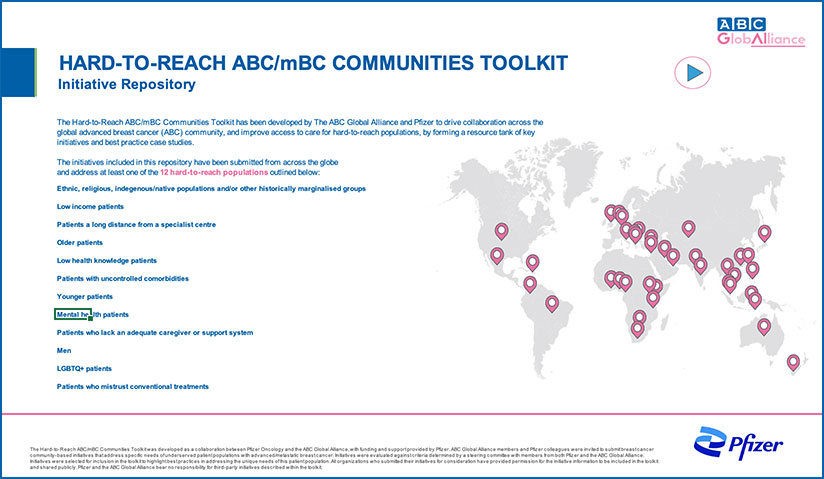
Hard-to-Reach ABC/mBC Communities Toolkit
Navigation Tools published on November 22, 2024 in Breast Cancer
To address the critical unmet need in access to care for hard-to-reach populations with advanced/metastatic breast cancer (ABC/MBC), the ABC Global Alliance and Pfizer have collaborated to develop a toolkit of relevant, community-based initiatives and best practice summary documents that aims to drive collaboration across the global ABC/MBC community.
How to Best Support Your Colleague with Cancer
Lillie D. Shockney, RN, BS, MAS, HON-ONN-CG
Navigation & Survivorship News published on January 24, 2024 in Insights into Navigation
Professional colleagues can become a constant and significant part of our daily routines. So how does this change if one of them is diagnosed with cancer? In this article, we offer some tips to help individuals support co-workers throughout cancer treatment.
Tips to Help Employed Patients With Cancer Navigate Their Treatment
Lillie D. Shockney, RN, BS, MAS, HON-ONN-CG
Navigation & Survivorship News published on December 20, 2023 in Insights into Navigation
When diagnosed with cancer, one of the first things people worry about is their ability to work. The good news is that there are steps that your patients and their employers can take to strike a balance between cancer treatments and work responsibilities.